Not Neurotypical™ (Neurodivergent)

Graham’s Late Diagnosed AuDHD Blog

Category: Time Blindness

  • On Taking Prescription Cocodomol 30/500mg 2-3x daily

    Published:

    Categories:

    ,

    So my daily medication regimen is the following:

    • Sirtraline
    • Mirtazapine
    • Pregabalin
    • Propanaol 2-4x daily
    • Diazepam 2-3x daily
    • Methylphenidate (ADHD)
    • CoCodomol 30/500mg (prescription only) 2-3x daily.

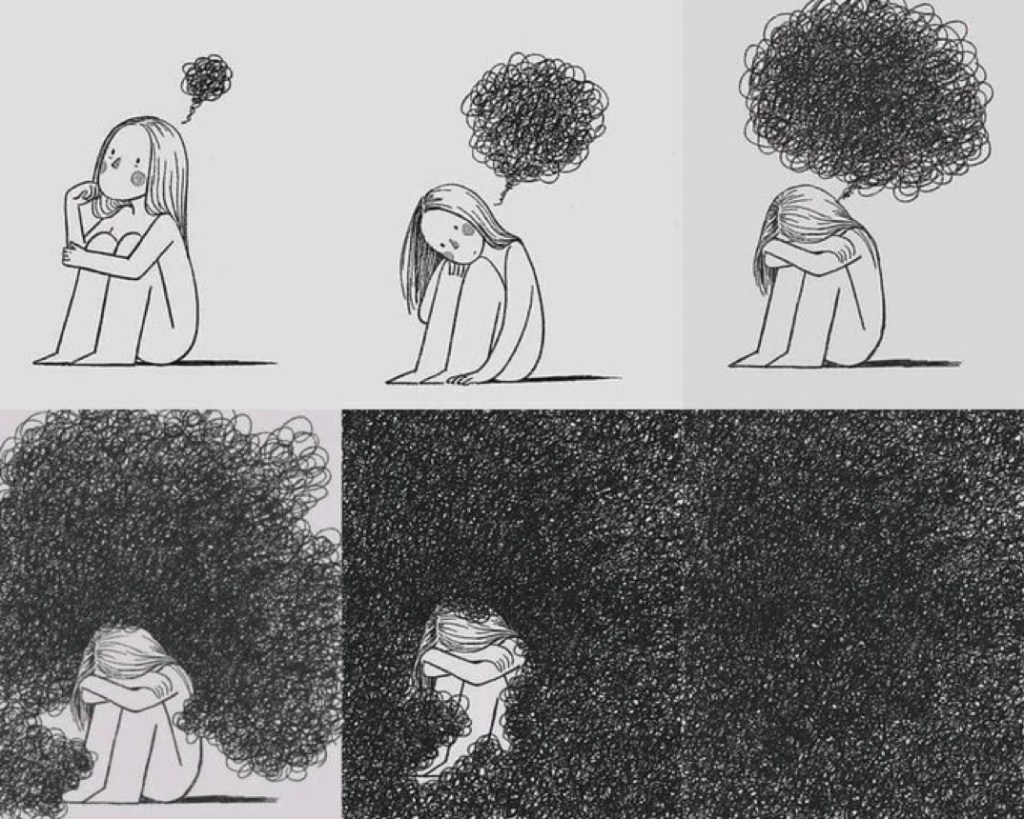
    CoCodomol is the only medication that actually helps ‘dissipate’ the depressive black fog; overall sense of hopelessness and despair, that consumes me from the moment i wake up.

    It doesn’t lift my mood as such, neither does it feel like it’s acting as a ‘high’. It feels more like it helps dissipate the darkness, and allows the ‘real me’ to make a ‘brief’ appearance.

    I’ve been doing this for close to 3 years now, and thankfully have a GP who understands how it does work for me, and other patients, and continues to prescribe it for me.

    It has been documented that opiates can help with major depression and anxiety, but I found that it helped lessen the darkness by chance, after being prescribed it for back-pain.

    So taking CoCodomol alongside Diazapam, which essentially helps slow-down the exhausting ‘racing thoughts’ (Propanol helps with generally anxiety), I’m able to ‘look forward’ too 2-4hrs of feeling a little less awful.

    I’m nearly 3 years sober from Alcohol and Cannabis, so CoCodomol is my only ‘crutch’, and is obviously closely monitored.

    It’s obviously not ideal scenario longterm, but thinking about a day where I can’t take CoCodomol IS frightening. I’d almost certainly feel the need to take to drinking or smoking again, so feels like the lesser evil.

    Am under no illusions there is a ‘dependency’ factor here, and I’ve acknowledged as such to my GP, and Psychiatrist (who diagnosed my AuDHD and Methylphenidate) who seemed to have no issue with the CoCodomol, but that hurdle is for another day.

    I’ve recently discovered that Boots sell a stronger over-the-counter: 12/500mg. Cocodomol, alongside the common 8/500mg variety.

    I have bought a few packs of the 12/500mg, and have found 1-2 of these also helps, so I use these on days where I feel I can cope a bit better, without using up my precious 30/500mg supply.

  • My AuDHD experience of Meeting Someone New:

    Published:

    Not a fan of bumping into people and feeling obligated to make small talk, and all of that stuff.

    It’s a totally different experience depending on: if I know the person well, just barely, or to a complete stranger.

    They each create different: pressures, demands and expectations, and I can honestly say I struggle more with bumping into people I know, compared to a stranger.

    I’m generally so caught up with the myriad of thoughts, worries, problems, things-to-do, my own lack of self esteem and self worth, that trying to then have to switch on ‘masking mode’ can now often be near impossible.

    I’m not a rude person, or even impolite, quite the opposite, and this is what breaks my own heart and weighs heavily on me in these situations.

    In recent years my ability to mask and/or pretend in certain situations has dramatically reduced, to the point where as of now, I can barely fake a ‘good morning’ when I’m out walking Poppy, let alone extended small talk.

    The most I can manage, if I’m walking towards someone, and they say “good morning”, is: fake a brief smile, maybe raise my hand up as a gesture of saying hello, but I can’t muster the necessary words out of my mouth.

    I also wear my headphones to clearly indicate I’m otherwise engaged in listening to something (when in fact more often than not, I’m not listening to anything), but even then people still attempt to make conversation, and that then becomes tricky.

    It’s also become more common that I’ll insert some foam earplugs as well as headphones, as any form of background noise: people talking, children yelling, background music in a shop of cafe, is becoming harder to tolerate.

    It’s becoming more frequent that some people see me as being rude, and have dropped the odd passing “yeah, good morning to you too” as they walk past. To hear and feel that sort of reaction, is so upsetting, and further feeds into my belief that I’m just not a nice person.

    To feel so drained and weighed down by such a heavy mind, that I dread any social interaction is not something I feel I can maintain indefinitely.

    It’s not a life I’m living; I don’t get any sense of contentment, happiness, pleasure, satisfaction; it’s just existing… barely.

    I acknowledge I’ve been through such an awful few years with my mental health, and have lost my way particularly in light of my recent AuDHD diagnosis, but still…

    I’m so hard on myself to the point where I became more and more isolated; walking Poppy in places where I’d less likely to see people, to keep my distance, to avoid nosy and busy places, but living in a small town feels like wondering round the sides of a goldfish bowl, too anxious to even venture towards the middle.

    The following is a simplified list of things that I go through when I know I’m going to have to somehow acknowledged and interact with someone, particularly if I’m having a harder day than usual:

    My AuDHD experience of Meeting Someone New:

    1. Shit myself because I realise I’m about to meet someone new.
    2. Shit myself because I must now intiate ‘small talk’.
    3. Panic because I don’t want to have to make ‘small talk’ because I don’t like it, and have the energy.
    4. Before meeting ‘new person’ try to remind myself to ask ‘new persons’ name, and promise myself I’ll remember it by keeping repeating the name in my head, whilst trying to listen, and make ‘small talk’.
    5. I forget to ask name, but the ‘new person’ introduces themselves.
    6. Endure ‘small talk’; feels like eternity.
    7. After ‘small talk’ is concluded, I walk away having no idea of this ‘new persons’ name, or what was said.
    8. Feel guilty for not remembering the name, and now worry about meeting them again, whilst feeling shit because I couldn’t even remember to remember their name.
    9. Panic and stress that I came across as awkward, and/or weird, and/or uninteresting.
    10. Must now retreat to man cave and recover from ‘new person small talk’ ordeal.


  • ADHD — Two Contradictory Extremes

    Published:

    Categories:

    ADHD presents with paradoxical traits, meaning it can manifest as seemingly contradictory behaviors, meaning a lifetime of constantly trying to balance these opposing forces:

    ADHD is a confusing, contradictory concept.

    June Silny:Most ADHD traits reflect two extremes on a single continuum. For example, it’s impossible for me to focus on something boring or tedious, but I can zone in and lose half a day doing something I love. When I fall into this hyperfocus, I don’t hear phones ringing, I don’t feel hunger pangs, and I don’t make trips to the restroom. My sparked brain is excited and in love with the joy of being in the moment. In a split second, I can jump from restless distraction to extreme hyperfocus.”

    However, if you have both Autism and ADHD (AuDHD), then this becomes an almost impossible existence, as some Autistic traits are contradictory to the ADHD contradictions, but this post focuses on ‘just’ the ADHD contradictions

    Some Simplified ADHD Contradictions:

    • Too loud. Too quiet.
    • Too lazy. Too driven.
    • Too slow. Too fast.
    • Too early. Too late.
    • Too focused. Too distracted.
    • Too sensitive. Too insensitive.
    • Too hot; too cold.
    • Too stimulated. Too subdued.
    • Too crowded. Too lonely.
    • Too overwhelmed. Too bored.
    • Too tired. Too wired.
    • Too organised. Too chaotic.
    • Too much masking. Too little masking.
    • Too much dopamine. Too little dopamine
    • Too much to do; too drained to do any of it.


    June Silny: These contradictions highlight the complexity of ADHD and emphasize the importance of understanding the individual’s unique experiences and challenges. It’s crucial to remember that ADHD is not a simple deficit of attention or hyperactivity, but rather a neurodevelopmental condition that can manifest in a wide range of ways,


  • Describing ADHD to Neurotypicals by Worksimple.io

    Published:

    Categories:

    ,

    There are numerous examples of ADHD to Neurotypical translations: explanations, analogies, descriptions etc; I’ll be posting more of these, as I come across them.

    Whilst checking socials today, I came across this one on Threads by @worksimple.io that is aimed at describing ADHD in the workplace, but it applies to daily life:

    Describing ADHD to Neurotypicals in the Workplace | Worksimple.io

    “Imagine you have one outlet. Plugged into it is a TV, a radio, and an alarm clock—all going off at the same time. This is what the inside of my brain sounds like.

    I’m trying to listen to you, but you’re getting drowned out by all the other noises going on.

    The only way I can unplug something is if I replace it with another stimulus.

    So if I replace it with a quieter stimulus, that takes some focus (but not all of it), I can unplug everything and suddenly, I can hear you clearly

    So you know how some people sleep with white noise machines to drown out all the OTHER STUFF that might distract them from sleep?

    As an ADHDer, the “other stuff” is like 40 different things running around in my head.

    I too, need something that can drown out the noise so I can focus on the task at hand.

    For me, that’s knitting or working from a coffee shop—which might SEEM like a distraction from work (but it’s actually a distraction from my brain, which is distracting me from work)

    You know those days where you’re SUPER productive and it feels good? I get those days, except my brain also works on super speed—getting more done in a few hours than I might normally in a week.

    Unfortunately, that energy comes in spurts! And sometimes, regardless of how hard I try, I can’t do any tasks—it’s like my brain is paralyzed.

    Over time, the super speed productivity and the paralysis cancel each other out, but sometimes it doesn’t look “consistent” in real time.”

    Source: Describing ADHD to Neurotypicals


  • What I Think & What I Say

    Published:

    Categories:

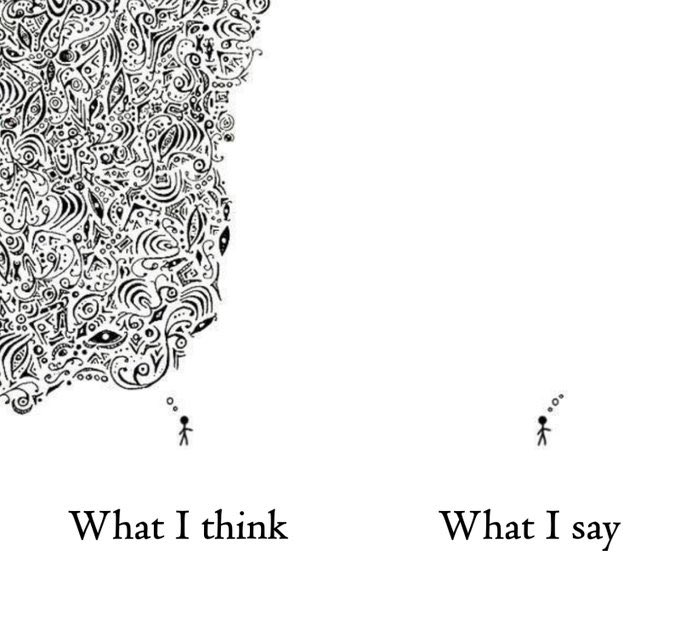
    For me it’s a constant battle to keep as vocally silent as possible.

    There are occasions of course where I will open up, usually with a close friend, but even then it’s excruciatingly hard for me to say all the things stuck in my head, because in part I simply don’t know how to articulate what it is that is going on in my head, and with my body; this ‘lost for words’ has been hugely exaggerated by the AuDHD diagnosis.

    Essentially, I just don’t want to lower someone’s vibe, because it genuinely feels there’s a lack of positive things for me to talk about, as the last few years have just been relentlessly challenging.

    Even if I have shared with someone afterwards, I’ll have this immense and overwhelming tidal wave of guilt, and shame, that I didn’t keep my mouth shut.

    It’s also got to the point where hearing myself talk about my feelings/emotions makes me feel worse; hearing my own words just reinforces just how ‘low’ and ‘broken’ I feel I am, and won’t be started on my lack of hope for the future.

    I just don’t need to hear all this come out of my mouth, yet I know how important it can be to talk about things. The battle ‘to do’ or ‘not to do’, just grinds me to a halt.

    Source: https://x.com/noqbly/


  • The Worst Part about having Mental Health Issues?

    The quote below is something that I’ve experienced in one form or another, since I first started experiencing depression and anxiety, some 35 years ago.

    “The worst part about having mental health issues? That you’re seemingly required to have a breakdown in order for people to understand how hard you were trying to hold yourself together.

    Also terrible: post-breakdown, once you recover any noticeable functionality whatsoever, it’s often assumed that you must be “better now“.

    Any backslide is met with more skepticism, than sympathy.

    Like, “I don’t understand; I thought you were over this” or “why dont you just do what you did to feel better last time; you know it will work now.”

    Source: https://x.com/nononsensend/

    It gets to the point that you become reluctant to exhibit any ‘improvement’, no matter how small or brief, because it gives those that care a false sense of hope.

    So you live in this perpetual enforced state of ‘holding back’ sharing or showing any kind of improvement… until you are absolutely sure you’ve managed to properly ride out that particular mental health crisis.

    But always back of your mind you just know it’s a matter of time till you’re back down in the pit of blackness.

    After years of this exhaustive back and forth? You learn it’s easier to just slowly withdraw and isolate completely, so you don’t need to worry about masking, explaining, justifying etc.

    This following quote was in response to the above, and basically just sums it all up:

    The mental health paradox: you need to completely fall apart to prove you were holding it together.

    Source: https://x.com/mindpopapp/

    Conclusion?

    Damned if you do; damned if you don’t .


  • Healing is so Hard…

    Published:

    Categories:

    ,

    Found this wonderful quote by @bluewmist

    It’s so elegantly stated, whilst being very relatable, irrespective of what sort of healing one is going through:

    “Healing is so hard, because it is a constant battle between your Inner Child who is scared and just wants safety; your Inner Teenager who is angry, and just wants justice; and your Current Self who is tired, and just wants peace.”

    Source: https://x.com/bluewmist/


  • Autistic Grief Is Not Like Neurotypical Grief | By Karla Fisher

    Published:

    Categories:

    ,

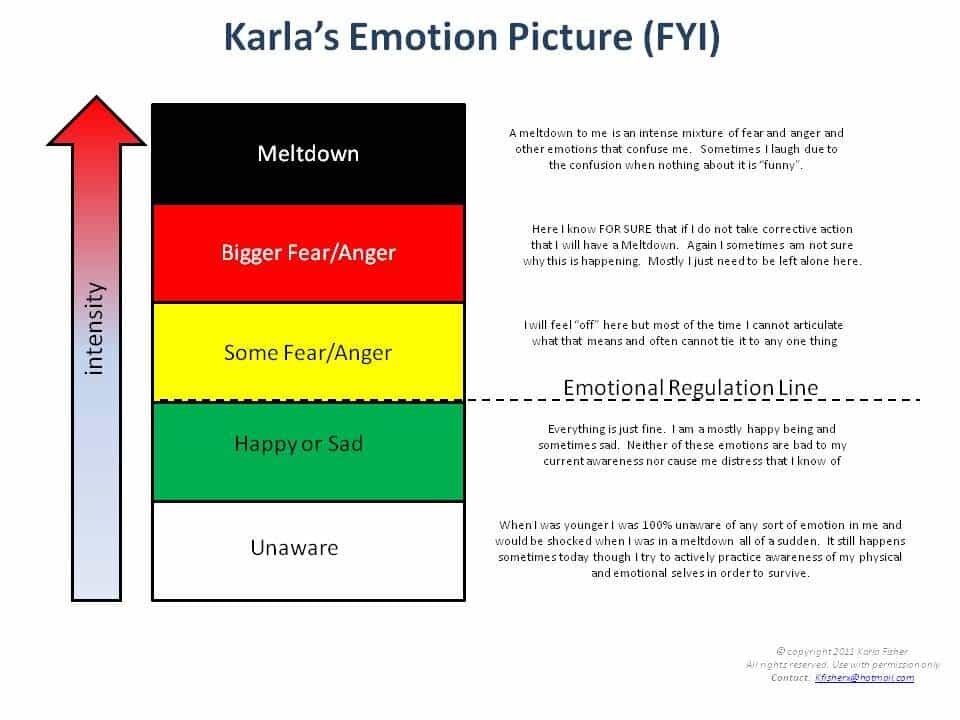
    Stumbled across this blog post by Karla Fisher, which goes into detail about her experiences, and subsequent management, of her Autistic Grief.

    Pulled out this section of text, from the end of the post, which provide a few key takeaways:


    ASD Grief Things to Think About

    1. May or may not cry or overtly show emotions. Alternatively, emotions may be delayed or very extreme when they do come.
    2. Grieving will very possibly manifest itself via increased ASD
      symptoms (increased sensory processing issues, shutdowns, meltdowns,
      decreased social abilities, etc.).
    3. May be unable to articulate what is wrong or talk about feelings.
    4. Increased desire to be alone to work things out (this is opposite of most NTs who will feel better by sharing how they feel).
    5. May not relate to many emotional or relational concepts designed by NTs.

    Source: Autistic Grief; Not Like Neurotypical Grief


  • ADHD Time Blindness Explained for Nuerotypicals

    Published:

    Categories:

    , ,

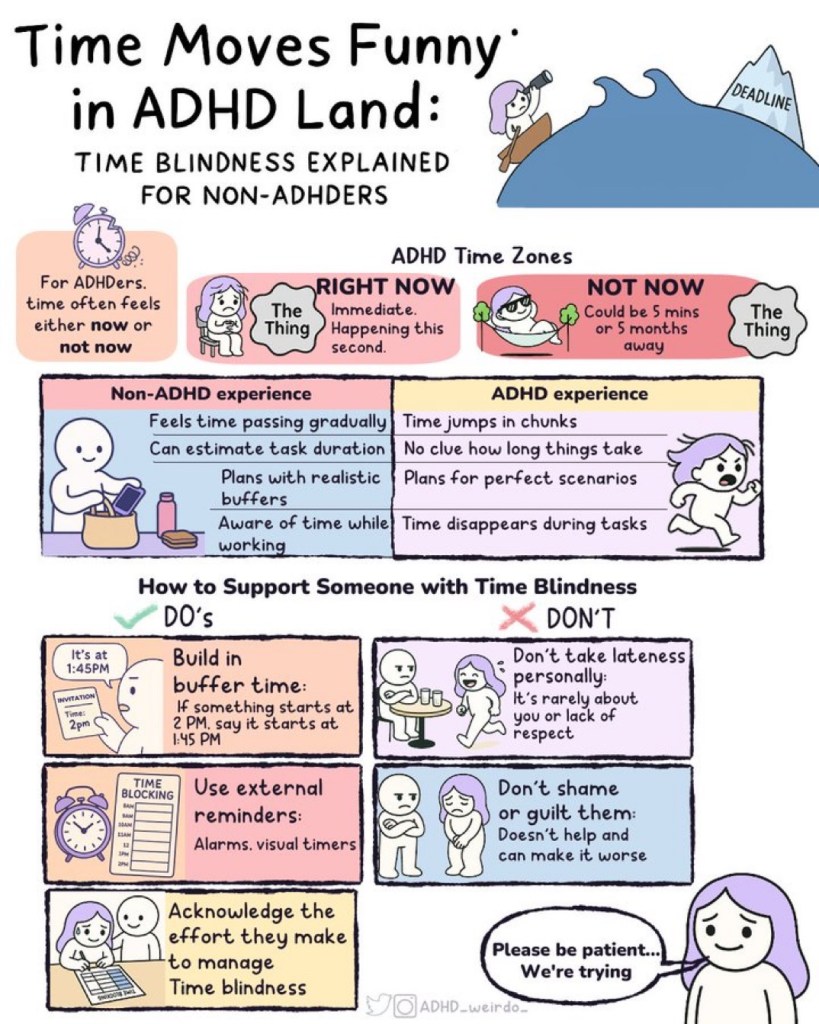
    There generally 2 types of ADHDers:

    1. Spend the entire day in “waiting mode” because there’s a Thing at 1pm.
    2. “Thing at 1 pm? Great, I’ll just do 37 ‘quick’ things first.

    ↓Illustration Source: https://x.com/adhd_weirdo_


  • Atypical Burnout

    Published:

    Categories:

    ,

    Autistic Burnout refers to a state of exhaustion created by using up all of your internal resources.

    Autistic burnout is often used by autistic adults to describe a state of incapacitation, exhaustion, and distress in every area of life.

    Informally, autistic adults describe how burnout has cost them jobs, friends, activities, independence, mental and physical health, and pushed them to suicidal behavior.”

    Source: Raymaker et al (2020) — Unknown